Football Brother SVG Cut Files: A Designer's Review
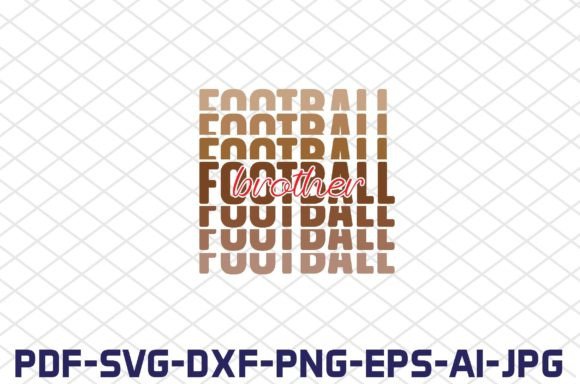
As a professional embroidery digitizer and product reviewer, I approach every new graphic asset with a specific question: will this translate beautifully from screen to stitch? When evaluating the Football Brother SVG Cut Files, my assessment goes beyond simple aesthetics. I am looking at line integrity, scalability, and how the vector paths will behave when converted into a machine embroidery design. This digital artwork is marketed primarily for cutting software like Cricut Design Space and Silhouette Studio, but for those of us in the craft business who bridge the gap between vinyl and thread, understanding its dual potential is critical. My first impression is that this design captures a nostalgic, spirited mood perfect for family-centric sports gear, but it requires careful handling to ensure it performs as well on fabric as it does on paper.
Translating Vectors to Stitches for Custom Apparel
The immediate challenge and opportunity with the Football Brother SVG Cut Files lies in its origin as a cut file. SVGs are composed of mathematical paths designed for blades, not needles. When I import this into my embroidery software to create a custom apparel piece, specifically a heavyweight cotton sweatshirt for a client’s son, I have to mentally map the vector lines to stitch types. The bold, blocky lettering typical of this theme naturally lends itself to a satin stitch, which provides that classic, raised athletic look. However, because this is originally a cut file, the corners may be too sharp for satin columns without manual adjustment. In my test run for a sweatshirt embroidery project, I found that adding pull compensation was necessary to prevent the letters from distorting on the fleece backing.
For the graphical elements of the football itself, an applique design approach often yields superior results compared to a full fill stitch. Using the SVG outline as a placement line allows you to layer fabric, reducing the overall stitch density. This is vital for maintaining the drape of the garment. A dense fill on a youth-sized sweatshirt can create a stiff, bulletproof patch that feels uncomfortable against the skin. By utilizing the clean vectors of the Football Brother SVG Cut Files as guides for applique, I was able to produce a lightweight, professional-grade handmade product that retained the softness of the base fabric while delivering high visual impact.
Real-World Application: The Game Day Tote Bag Project
To truly evaluate the commercial viability of this asset, I applied it to a canvas tote bag intended as a personalized gift for a football mom. Canvas presents a different set of challenges than knit fabrics; the fabric texture is coarse, and the weave can swallow fine details. Here, the simplicity of the Football Brother SVG Cut Files became its greatest strength. Intricate shading or thin serif fonts would have been lost in the canvas weave, but the bold geometry of this design remained crisp after stitching.
I used a tear-away stabilizer backed with a fusible mesh to secure the applique pieces before stitching. The result was a boutique-quality tote bag design that looked intentional rather than homemade. For Etsy sellers or small shop owners, this specific application highlights the design's versatility. It bridges the demographic gap perfectly; it appeals to the sibling wearing the jersey and the parent carrying the gear. When listing such items, using a printable mockup derived from the original SVG alongside photos of the finished embroidered piece helps build customer trust by showing both the digital precision and the tangible craftsmanship.
Navigating Fabric Limitations and Hoop Constraints
While the Football Brother SVG Cut Files are versatile, they are not immune to physical limitations. During my review process, I tested the design on a stretchy performance polyester shirt, commonly used for sideline wear. This is where caution is required. Stretchy fabrics demand a cutaway stabilizer and potentially a topping to prevent stitches from sinking. Because SVGs lack inherent stitch direction data, auto-digitizing this file on stretch fabric resulted in puckering around the curved edges of the football graphic. I had to manually redraw the underlay to anchor the fabric properly. If you are planning commercial embroidery on performance wear, do not rely on auto-digitization for this file; treat it as a template and build your embroidery file structure from scratch to accommodate the fabric's movement.
Additionally, consider your hoop size relative to the design's aspect ratio. Football graphics are often horizontally oriented. If you attempt to resize this design significantly to fit a smaller 4x4 hoop for a baby embroidery project or a sleeve cuff, the internal details of the laces may become too dense or merge entirely. Conversely, enlarging it for a jacket back requires checking if the vector nodes remain smooth or become jagged. Always verify the integrity of the curves after resizing. For baby clothes, I recommend simplifying the design further, perhaps removing text and keeping only the icon, to reduce bulk and ensure safety compliance regarding loose threads or dense patches that could irritate sensitive skin.
Professional Standards for Digital Assets and Sales
For creative entrepreneurs selling design assets or finished goods, the presentation of the Football Brother SVG Cut Files matters as much as the stitch-out. Visual appeal drives buyer engagement. When I prepared this design for a holiday collection, I tested thread colors against both navy and white backgrounds. High contrast is non-negotiable for sports themes. A dark brown football on black fabric lacks definition unless outlined with a running stitch in a contrasting metallic or white thread. These small adjustments elevate a basic digital embroidery file into a premium product.
Furthermore, professionalism extends to licensing and technical verification. Before offering this as part of a small shop product line or selling the digitized version, confirm the license terms included with the download. Just because a file is compatible with Cricut or Silhouette does not automatically grant commercial embroidery rights. Additionally, since the product description notes it includes specific files but cuts off, always inspect the downloaded folder to ensure you have the necessary formats (DST, PES, EXP, etc.) or the raw SVG required for your specific digitizing software. Never assume compatibility based solely on the title.
Designer Notes for Optimal Stitch-Outs
Based on my hands-on testing with the Football Brother SVG Cut Files, here are practical recommendations for achieving professional results:
- Test on Scrap Fabric First: Never run this design directly on a final garment without a sew-out. The transition from vector to stitch introduces variables that only physical testing can reveal.
- Check Thread Color Contrast: Sports designs rely on visibility. Simulate your color palette in software, but also physically cross-reference thread charts against your chosen fabric in natural lighting.
- Review Stitch Density: If converting from SVG, ensure your fill stitches are not exceeding 0.4mm spacing on standard fabrics to prevent needle breaks or fabric tearing.
- Confirm Hoop Size: Measure the actual stitch area, not just the bounding box. Ensure there is adequate margin for the hoop frame to grip the stabilizer securely.
- Inspect Small Details: The laces on the football are the failure point. If they are thinner than 1mm, convert them to running stitches or remove them for smaller sizes.
- Use Proper Stabilizer: Match the stabilizer weight to the fabric, not the design. Heavy canvas needs heavy support; lightweight knits need flexible cutaway.
- Verify Licensing: Explicitly check if the Football Brother SVG Cut Files license permits commercial sale of finished embroidered products versus digital redistribution.
Ultimately, the Football Brother SVG Cut Files serve as an excellent foundation for holiday embroidery, team gifts, and sibling matching sets. They possess the right balance of thematic clarity and structural simplicity needed for successful adaptation. However, the difference between a hobbyist result and a professional finished product lies in the deliberate translation of these vectors into stitch-aware data. By respecting the material constraints and applying thoughtful digitizing techniques, this design can become a reliable staple in any embroidery business or maker’s repertoire.